
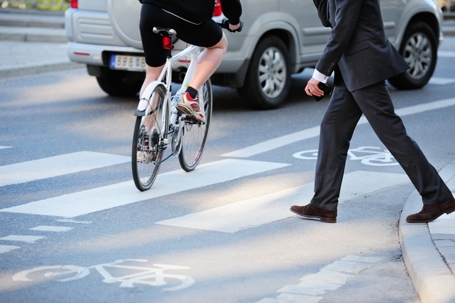
Nashville recorded 28 pedestrian fatalities in the first seven months of 2026. That number already exceeds the 15 pedestrian deaths counted across all of 2025, according to Metro Nashville Police Department data. The city isn’t simply having a bad stretch of luck; the collisions are concentrating at the same corridors and crossings that transportation planners have flagged for years.
You’ve probably heard that Nashville is the “second most dangerous city for pedestrians.” That claim traces back to a 2023 ranking published by a footwear company, not an official transportation study. The current benchmark comes from Smart Growth America’s Dangerous by Design 2026 report, which places the Nashville metro 37th out of 101 metro areas nationally for pedestrian fatality rate, based on federal crash data from 2020 through 2024. That’s still a serious position on a troubling list, and the 2026 spike suggests the local trend is moving in the wrong direction even as the national ranking softened.
We’ve represented pedestrian injury victims in Nashville for nearly three decades. We know these streets. The corridors appearing in crash reports today are largely the same ones that have appeared in every traffic safety review for the past decade, and understanding where they are and why they’re dangerous matters for anyone walking in this city.
Injured on a Nashville street? Contact Law Office of Stanley A. Davis at (615) 866-3938 today for a free case evaluation.
Why Pedestrian Deaths Are Climbing on Nashville’s Streets
Nashville’s most dangerous roads for pedestrians didn’t get that way overnight. Corridors like Gallatin Pike, Murfreesboro Pike, and Dickerson Pike were designed and built in the 1940s, ’50s, and ’60s primarily to move automobile traffic at speed. Sidewalks, crosswalk spacing, and pedestrian signal timing were afterthoughts, if they were considered at all. Decades of widening and commercial development along those same roads added more driveways, more turning movements, and more conflict points without meaningfully updating the pedestrian infrastructure.
The result is what transportation planners call a failure of arterial roadway design. This is a category of road built for high vehicle throughput that generates disproportionately high pedestrian crash rates. Metro Nashville’s Vision Zero Action Plan identifies a High-Injury Network: a mapped set of streets and intersections that account for the overwhelming majority of serious pedestrian crashes. Nearly 90 percent of those locations sit in areas with high concentrations of poverty, renters, and cost-burdened households, meaning the people most at risk are also those with the fewest alternatives to walking.
Nashville’s Official High-Injury Intersections & Corridors
Metro’s Vision Zero Action Plan appendices name specific intersections rather than just corridors. This is the most useful data available for someone trying to assess whether their own crossing point is a documented hazard. The following intersections appear in that official listing:
- Murfreesboro Pike and Hamilton Church Road in Antioch, one of the most active transit corridors in Southeast Nashville
- Nolensville Pike and Harding Place, a wide multi-lane crossing with high-speed approach traffic
- Dickerson Pike and Ewing Drive, a stretch of North Nashville known for frequent pedestrian conflicts
- Old Hickory Boulevard and Gallatin Pike, where a suburban arterial meets a high-volume commercial strip
- W. Trinity Lane and Brick Church Pike in the North Nashville corridor
- Nolensville Pike and W. Thompson Lane, another documented high-injury crossing in that same corridor
These aren’t the only dangerous crossings in Nashville, but they’re the ones Metro has formally identified as priority locations under the Complete Streets framework. This approach to road design accounts for pedestrians, cyclists, and transit riders rather than treating vehicle movement as the sole standard. Knowing that an intersection appears on this list can matter in a pedestrian injury claim, because it supports the argument that the hazard was known and addressable long before a specific crash occurred.
Germantown’s 3rd Avenue North & Van Buren Street: A Case in Point
Official lists and corridor maps describe patterns. Individual crashes show what those patterns cost.
On June 8, 2025, 77-year-old Dorothy “Dot” Dobbins was struck and killed while crossing in a marked crosswalk at 3rd Avenue North and Van Buren Street in the Germantown neighborhood. Roughly two months later, a 22-year-old cyclist was struck at the same intersection while riding through that same crosswalk. Two serious collisions at one crossing within ten weeks of each other.
Metro Councilmember Jacob Kupin, who represents Germantown, confirmed publicly that the city is fast-tracking safety improvements at that intersection, including a pedestrian-activated beacon that stops vehicle traffic only when a pedestrian initiates it. The fact that the upgrade is being fast-tracked rather than proceeding through the normal capital planning cycle reflects how clearly the risk was apparent to city officials well before either collision occurred. That gap between known risk and corrective action sits at the center of many pedestrian injury cases: when a dangerous condition is documented and the responsible party has failed to address it, that failure can become a central element of a negligence claim.
Your Rights as a Pedestrian Under Tennessee Law
Tennessee law protects pedestrians more broadly than many people realize, and the rules apply even at intersections without clearly marked crosswalks.
Under Tenn. Code Ann. § 55-8-134, when traffic-control signals aren’t in place or aren’t in operation, drivers must yield the right-of-way to pedestrians crossing within a crosswalk. The practical implication is that a pedestrian crossing at an intersection, even without painted lines on the pavement, has a legal right to cross that a driver is obligated to respect.
Two additional legal principles shape what happens after a crash:
Modified Comparative Fault
Tennessee follows a modified comparative fault rule. A pedestrian can still recover damages even if they share some responsibility for the collision, as long as their share of fault is less than 50 percent. Compensation is reduced by their percentage of fault, so a pedestrian found 20 percent at fault in a $100,000 case would recover $80,000. Insurance companies routinely try to push a pedestrian’s assigned fault to 50 percent or above to eliminate recovery entirely. Understanding that threshold matters.
Statute of Limitations
Under Tenn. Code Ann. § 28-3-104, the deadline to file a pedestrian injury claim is one year from the date of the accident, one of the shortest filing deadlines in the country. Missing it almost always means losing the right to any recovery, regardless of how clear the liability is. The clock starts on the day of the crash, not the day a diagnosis is confirmed or treatment ends.
What to Do After a Pedestrian Accident at a Dangerous Intersection
The actions taken in the hours and days immediately after a pedestrian collision have a direct effect on what a claim can recover.
Get Medical Attention Immediately
Seek care even when injuries seem minor. Conditions like a traumatic brain injury, internal bleeding, or soft-tissue damage often don’t produce obvious symptoms right away. A gap between the crash and a medical visit gives insurance adjusters an argument that the injury wasn’t serious or wasn’t caused by the collision.
Document Everything You Can
If you’re physically able, photograph the intersection, the vehicle, any crosswalk markings or signal equipment, and your injuries. Gather names and contact information from anyone who witnessed the crash. Request the official Metro Nashville Police Department crash report, which will contain the officer’s notes on conditions, location, and preliminary fault assessment.
Be Careful with Insurance Communications
Don’t give a recorded statement to the at-fault driver’s insurance company, and don’t accept an early settlement offer without speaking with an attorney first. Early offers are typically calculated to close the claim before the full extent of injuries and long-term costs is known. Once a settlement is signed, the claim is closed permanently.
If you or someone you know has been hurt in a pedestrian collision in the Nashville area, Law Office of Stanley A. Davisffers free consultations and handles pedestrian accident cases on a contingency basis, meaning there are no fees unless we recover for you. You can reach us at (615) 866-3938.